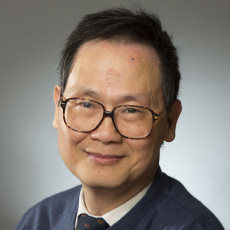
Duc Truong Pham obtained his Bachelor of Engineering (Mechanical) degree with First-Class Honours, PhD degree and DEng degree from the University of Canterbury, New Zealand. His DEng degree was for published work in the field of Systems Engineering in the period 1979-1993. Between 1979 and 1988, he held a lectureship in Control Engineering at the University of Birmingham where his research focussed on robotics and automation. In 1988, he joined Cardiff University following his appointment to the Chair in Computer-Controlled Manufacture there.
In 1996, he founded the Manufacturing Engineering Centre at Cardiff University. Under his leadership, the Centre won numerous awards for its innovative manufacturing research and industrial collaboration. Notable accolades include the Secretary of State for Trade and Industry's First Prize for “success in building lasting research partnerships with industry” and the Queen's Anniversary Prize for creating an “exceptional programme of support for firms” using the Centre’s research expertise and state-of-the-art facilities.
At Cardiff, his research encompassed the areas of intelligent systems and advanced manufacturing engineering. His projects covered topics such as knowledge-based systems for manufacturing design and quality control, robot vision and automated visual inspection systems, neural networks for non-linear systems identification and control, rapid prototyping and tooling, micro fabrication, virtual reality and multi-media intelligent product manuals. The amount of external research grants and contracts he secured for the Centre exceeded £30M. He returned to the University of Birmingham in 2011 to take up the position of Head of the School of Mechanical Engineering and Chance Professor of Engineering.
Duc-Truong Pham holds the Chance Chair of Engineering at the University of Birmingham. He has published over 700 papers and books on intelligent systems, advanced manufacturing and remanufacturing and has graduated more than 100 PhD students. His awards include five prizes from the Institution of Mechanical Engineers, a Lifetime Achievement Award from the World Automation Congress and a Distinguished International Academic Contribution Award from the IEEE. He is a Fellow of the Royal Academy of Engineering, Learned Society of Wales, SME, IET and IMechE. He is the founding editor of the Springer Series in Advanced Manufacturing and editor-in-chief of Cogent Engineering and the International Journal on Interactive Design and Manufacturing.
Title: Update Soon


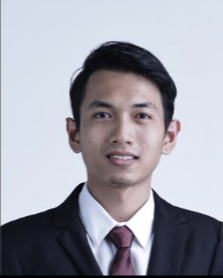
Dr. Muhammad Asyraf bin Muhammad Rizal (H-index: 44) also known as M.R.M. Asyraf is currently is a Senior Lecturer at Faculty of Mechanical Engineering, Universiti Teknologi Malaysia (UTM). He also served as Associate Research Fellow at Centre for Advanced Composite Materials (CACM), UTM. Currently, he was registered as a graduate engineer under the Board of Engineers Malaysia (BEM), a graduate technologist under the Malaysian Board of Technologist (MBOT) and corporate member of Persatuan Pembangunan Industri Enau Malaysia (PPIEM). Previously, he received his doctorate degree in Material Engineering at Universiti Putra Malaysia and being awarded as IKM Research Prize in Polymer & Materials Science. For his first degree, he was honoured to received Bachelor of Mechanical Engineering with first class honors (CGPA of 3.789). He also was the recipient of Royal Education Award 2018 by Conference of Rulers Malaysia, Excellent Graduate Award 2019 by Bank Rakyat Foundation and Excellent academic Award by UPM Corporation. His main research interests are: (1) Design Development and Concurrent Engineering; (2) Mechanical and thermal characterization of polymer composites; and (3) Creep analysis and service life analysis. Currently, he has authored and co-authored more than 200 articles, book chapters, conference proceedings, bulletins and books on polymer composites and concurrent engineering. His current H-index is 33 with more than 3309 citations as recorded by the Scopus database. Besides, he has delivered more than 10 international and local presentations from various conferences and seminars. In terms of scientific experience, he is a member of editorial boards in some international journals, and is also a leading guest editor in several reputable journals. Title:Update Soon
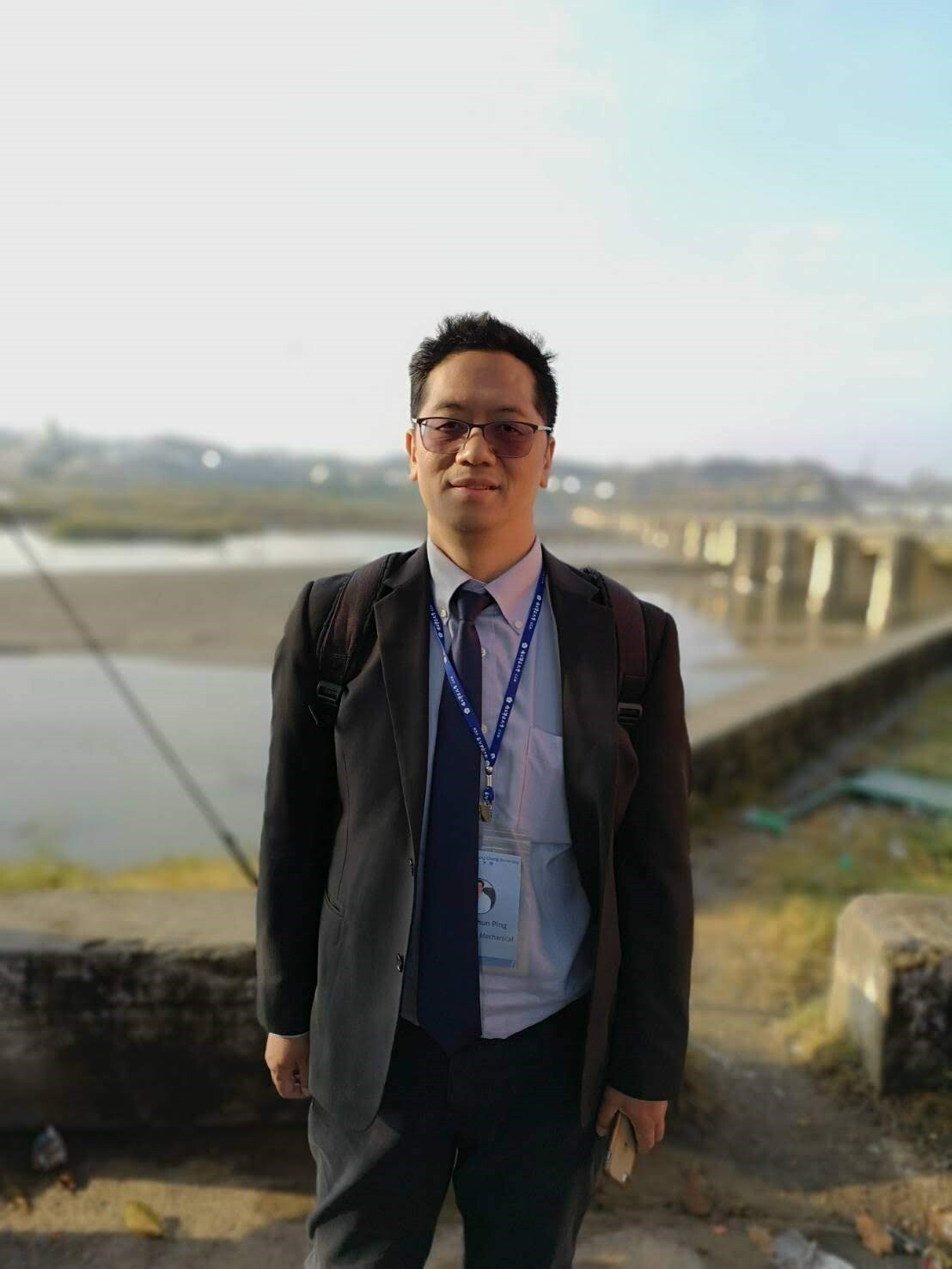
Chun-Ping Jen received the B.S. and Ph.D. degrees from the National Tsing Hua University, Hsinchu, Taiwan, in 1995 and 2000, respectively. He did the Postdoctoral Research with National Cheng Kung University, Tainan, Taiwan (2001–2004) and was a Visiting Scholar and an Assistant Research Scientist from 2004 to 2006 with Center for Applied Nanobioscience, Arizona State University, Phoenix, AZ, USA. He is currently a Full Professor with the Department of Mechanical Engineering, NationalChung Cheng University, Chiayi, Taiwan. He has authored or coauthored more than 100 international journal and conference papers. He is working on development of micro/nanodevices of BioMEMS modules and multiphysical simulation
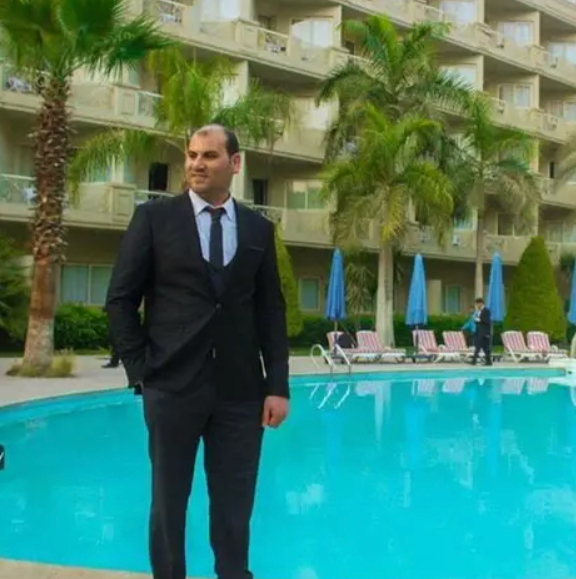
Prof. Dr. Nour F. Attia is Full professor at gas analysis and fire safety lab, chemistry division, National Institute of standards (NIS), Prof. Attia’s research contributions in the field of nanochemistry, energy gasses (H2 & CH4) storage, gas separation and greenhouse gases capture, smart textile, flame retardants and water treatments. This is in addition to sensors fabrication and thermal energy storage media. Prof. Attia published more than 116 international papers in high impact factor journals and presented in more than 60 in international conferences. Additionally, Dr. Nour published 5 book chapters, 6 international patents (2 USA and 4 Korean) and six Egyptian patents were recently filled. His H-index is 42. Also, he has been awarded several national and international prizes such as State Prize, National Institute of Standards Prize, Medal of Excellence from the first class from President of the Republic 2020 , Obada-Prize and Climate Change Alleviation Award 2022 from Mansoura University. He has been elected as a member of the Egyptian Young Academy of Sciences for 2021-2024. Additionally, he has selected among the highest distinguished top 2% worldwide scientists in the following connective years 2021,2022,2023,2024 and 2025. He has elected as member of National committee of new and advanced materials 2022-2025 and elected for another term 2025-2028. He is PI of several research projects funded from ASRT and STDF. Interestingly, he organized and chaired various international conferences and workshops in the filed of hydrogen energy, greenhouse gases and nanotechnology. Additionally, Prof. Attia academically supervised more than 20 postgraduates’ students and teaching in different Egyptian universities. Recently, he has been selected as member of Electricity and Energy Research Council 2025-2028, ASRT, Egypt. Also, he got the Prof. Dr. President of The Research Staff Club Award in Basic Science and Technological Applications, NRC, Egypt (Oct. 2025).Also, he is editor-in-chief of Journal of Climate Change Action and editorial board members for many international Journals.
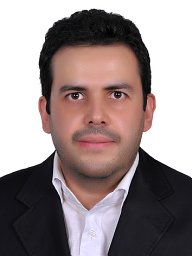
Prof. Dr. Shahid Hussain is an associate professor of mechanical engineering at the Iran University of Science and Technology. He got his Ph.D. in Mechanical Engineering from the University of Tehran in 2012. He currently does research in Mechanical Engineering and Materials Science. Their current projects are 1- Fabrication of clad metals (bimetals or multilayer sheet) 2- Experimental evaluation of forming limit diagram (FLD) and mechanical properties of Nano/ultra-fine grained materials fabricated by the accumulative roll bonding process. 3- Fabrication of metallic foils for different applications and determination of corresponding forming limit diagrams and mechanical properties. Consistently ranked among the world’s top 2% most-cited scientists (Elsevier/Stanford, 2020-2025). Demonstrated excellence in securing competitive grants, leading high-impact industrial R&D projects (>$100k total value), and translating research into patented technologies and a startup venture. A dedicated mentor with a proven record of supervising 5 PhD and over 50 Master's students to completion. My research (155+ publications, 5,851+ citations, h-index: 42, i10-index: 115) has established significant impact in the field. Seeking to contribute to the research excellence, innovation ecosystem, and graduate training mission of a leading international university.